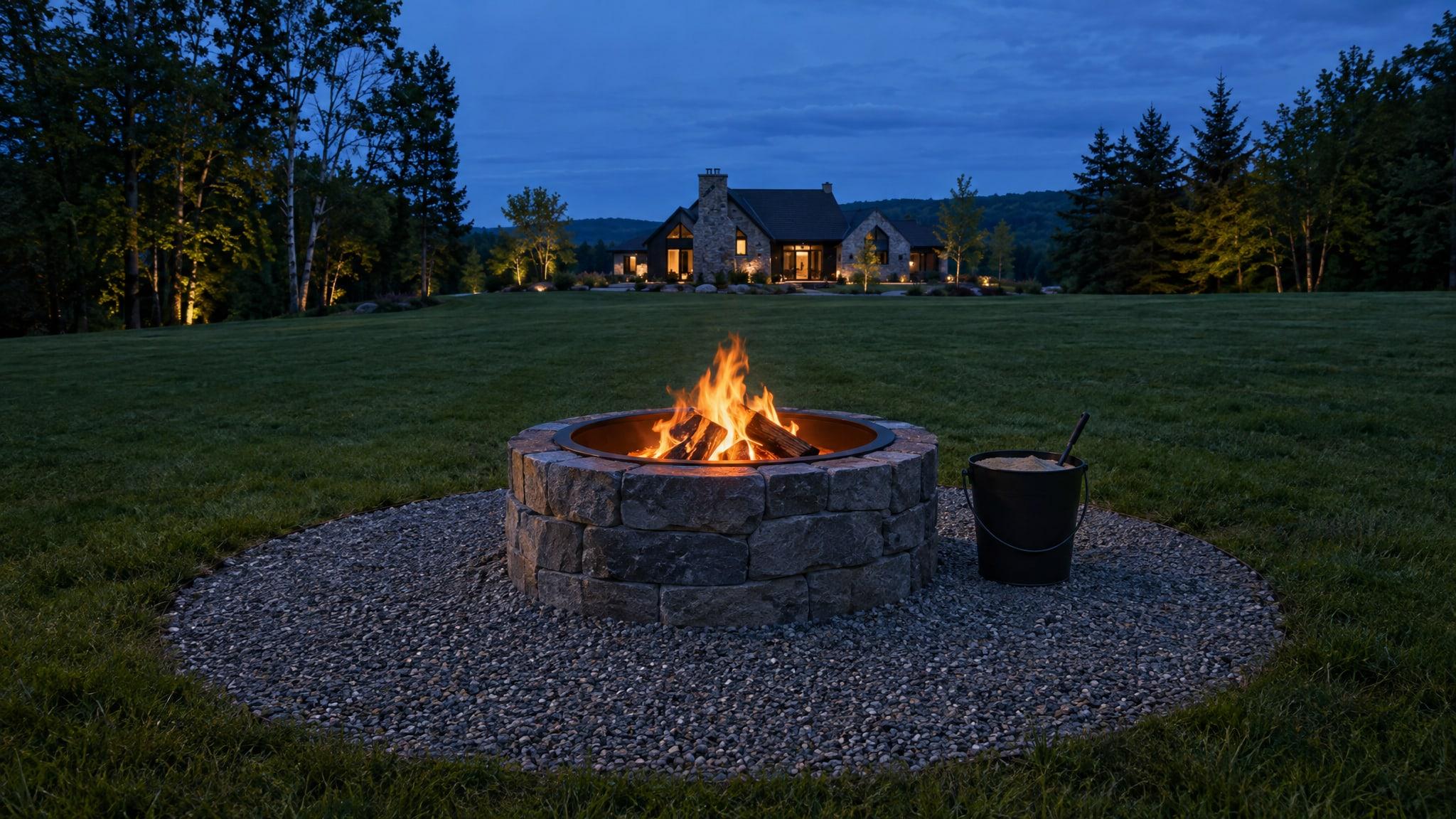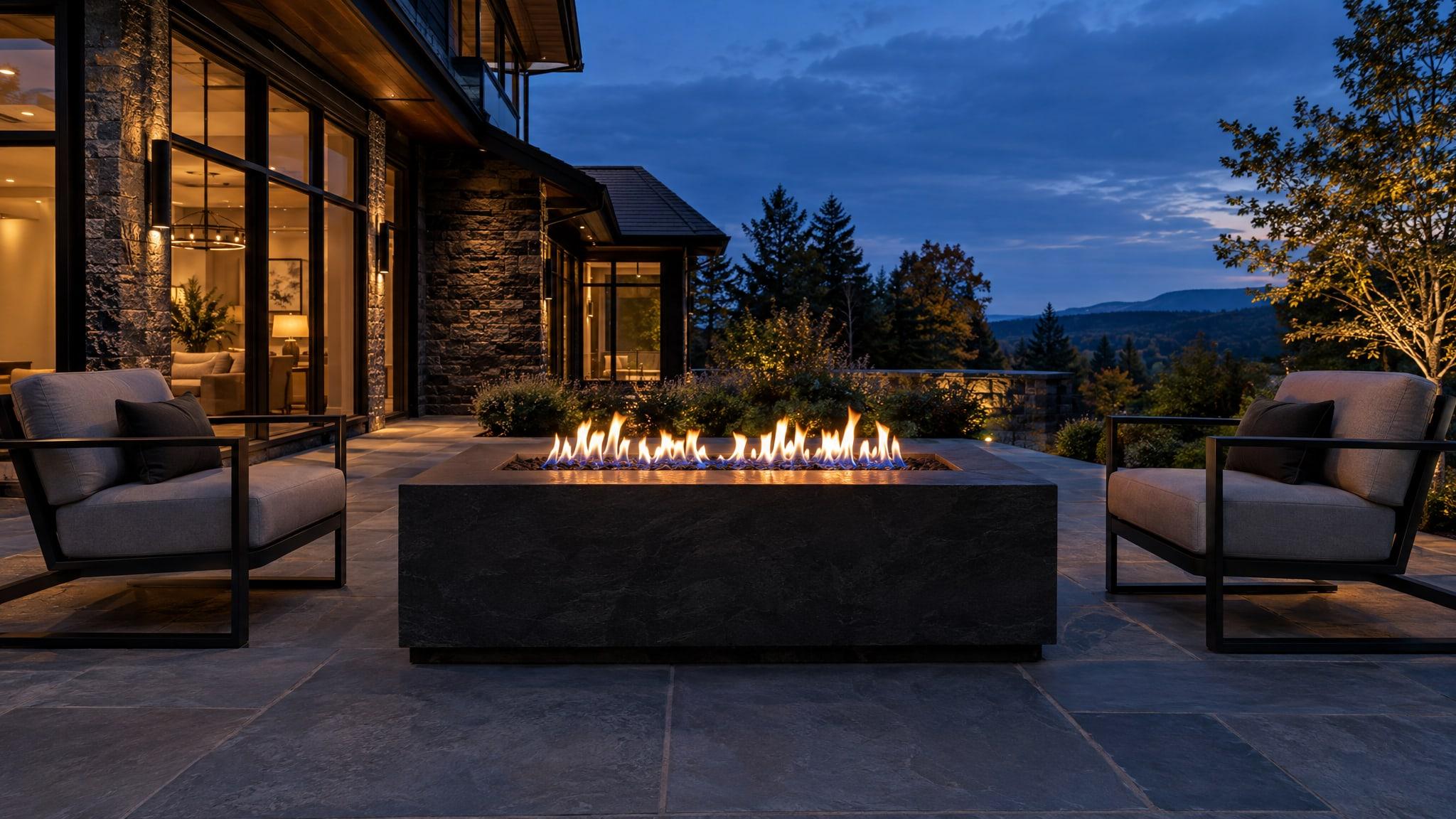
Gas fire pits are better if you want a fire at the flip of a switch with no smoke and no ash: built in, one typically runs $4,500 to $8,000 in southern New Hampshire, mostly because of the burner and the gas line. Wood is better if you want a real fire and a lower cost: a built-in wood pit typically runs $2,000 to $4,500.
How do wood and gas fire pits compare?
| Wood | Gas | |
|---|---|---|
| Typical built-in cost | $2,000 to $4,500 | $4,500 to $8,000 |
| The fire | Real crackle, real heat | Steady flame, gentler heat |
| Lighting it | Kindling and a match | A switch or a key |
| Smoke and ash | Yes | No |
| Fuel | Firewood | Natural gas or propane |
| Extra work | None | A gas line run to the pit |
Which is better for cooking?
Wood. Most gas fire tables are made for flame and warmth, not for grilling or cooking over the fire.
Do the permit rules differ?
In Windham every outside fire needs a burning permit, and a pit up to 2 feet across in a fire-resistant ring, 25 feet from buildings, is a Category I fire. Plan the same clearances for either kind, and ask your town how it treats a gas fire table.
How do I decide?
- Choose wood if you want the campfire evening and the lower cost.
- Choose gas if you want a fire on a weeknight with no cleanup.
- Either way, plan the patio and seating with the pit, not after it.
Every range here is a typical southern New Hampshire and Massachusetts 2026 market figure from the sources below, the same figures the Property Price Planner uses. Your own number is confirmed at a free walkthrough.