Retaining walls
Retaining walls
Block and natural stone walls that hold a slope and turn it into usable yard.
The short answer
How a wall stays standing
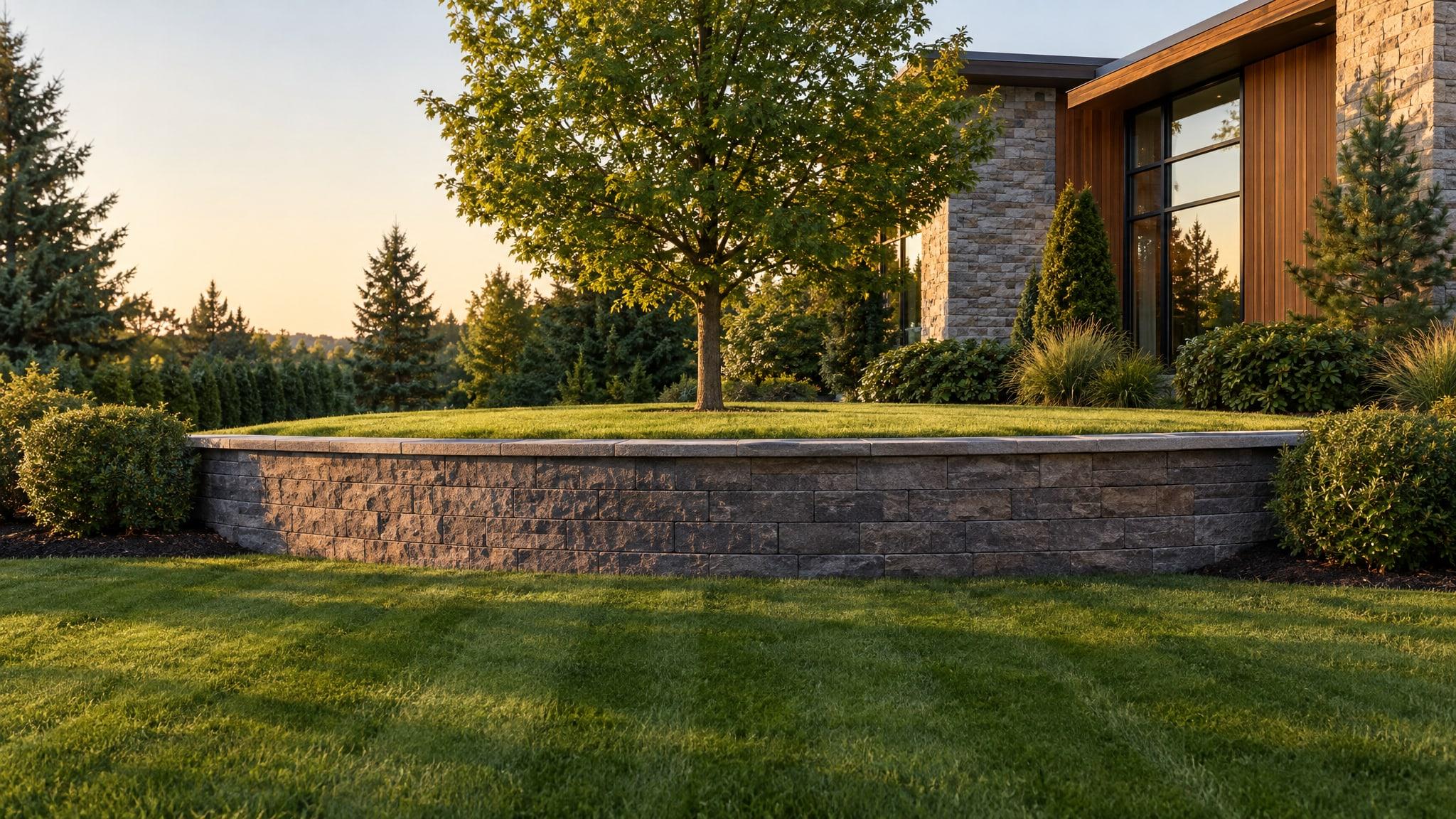
A retaining wall holds back soil on a slope so the ground above and below it can be used. We build block and natural stone walls, from low garden walls to terraced slopes.
A wall fails when water and frost push on it. We dig a footing, set a compacted base, bury the first course, and backfill with drainage stone and a drain pipe so water has a way out. Taller walls step back into the slope; where a wall needs an engineer, we say so before we price it.
Walls we build
Each one gets the same base, backfill and drainage.
Natural stone
Hand-selected stone for a classic wall that suits an older New England yard.
Segmental block
Interlocking block in textured, smooth or tumbled finishes, made for freeze and thaw.
Terraced walls
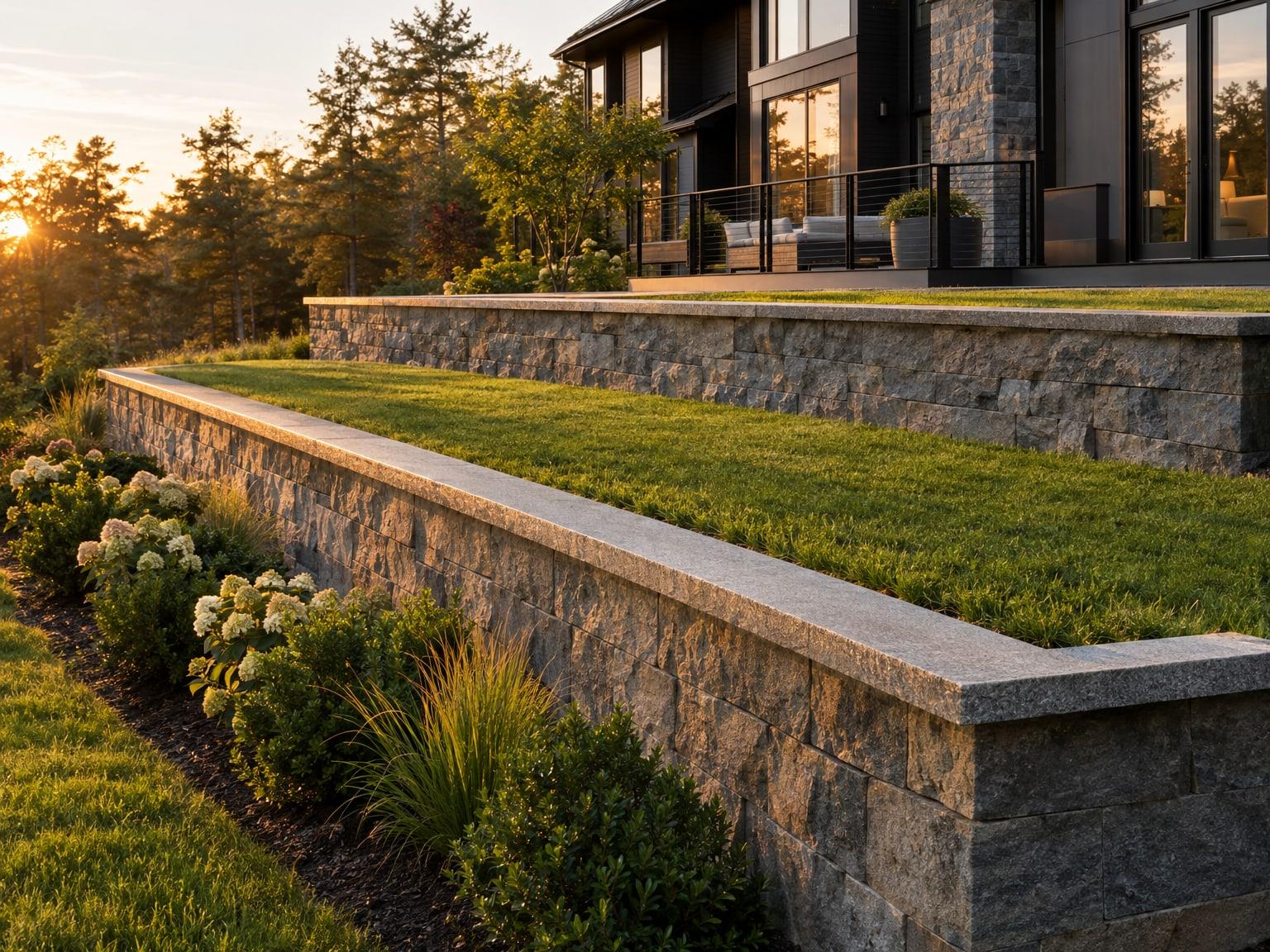
Two or more lower walls that step a steep slope into level beds or lawn.
Boundary and seat walls
Low walls that mark an edge, frame a bed or give a patio somewhere to sit.
How it works
How we do retaining walls
Price it, then walk it
Price your property on the Planner, then we walk the yard with you and confirm the number in writing.
Measure the slope
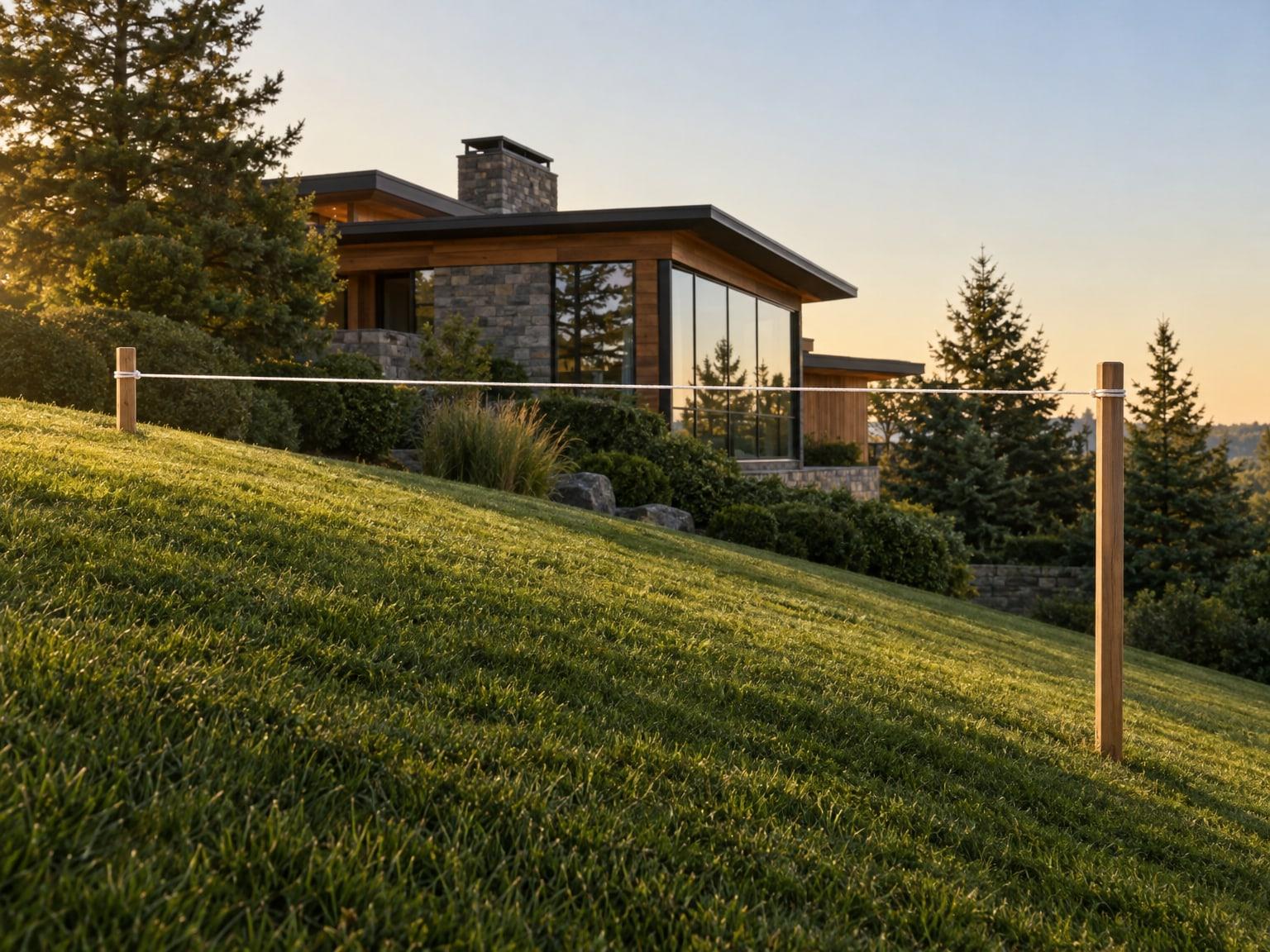
We measure the height and length and look at where the water goes.
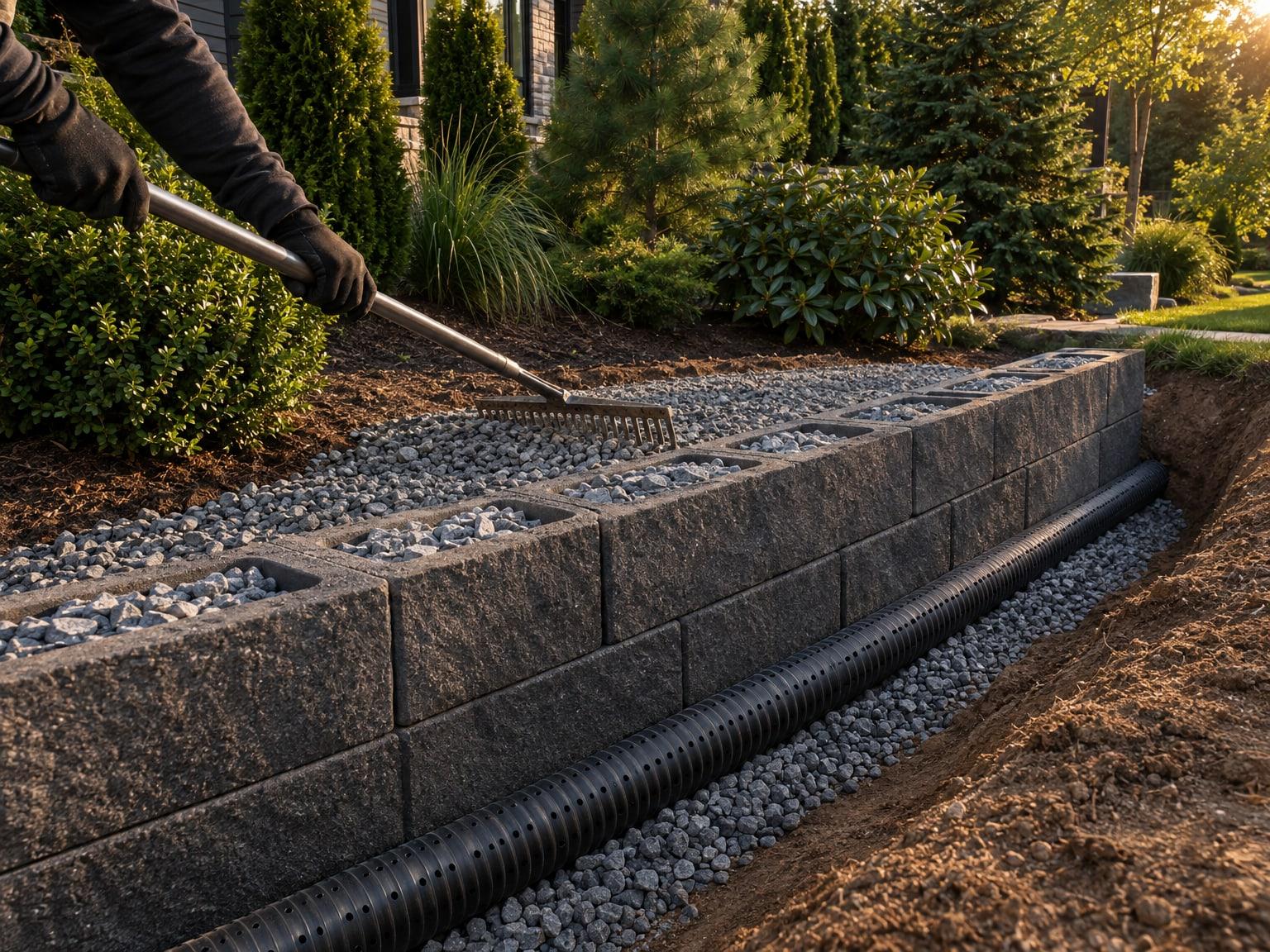
Footing, courses, drainage
Base, buried first course, drainage backfill, cap, then a final walk.
Pricing
What drives the price of a wall
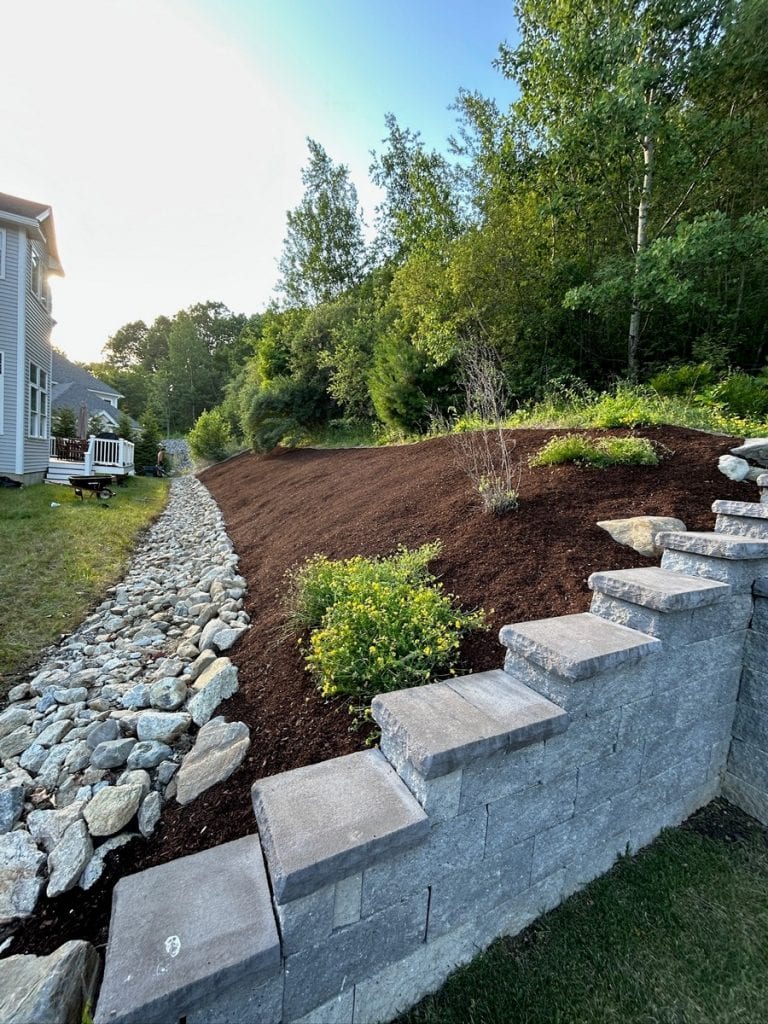
Face area and material: about $35 to $60 a face square foot in block and $55 to $85 in natural stone. A low garden wall about 20 feet long runs $1,400 to $2,400; drainage, caps, curves and machine access move the number from there. Ranges are typical southern New Hampshire figures, confirmed at your free walkthrough.
$4,200 to $7,200
A block wall about 40 ft long and 3 ft tall
Photo: a B&W Outdoor job.
What your written quote lists
- Excavation and a compacted base
- Drainage stone and pipe behind the wall
- Block or stone set level, course by course
- Caps
- Backfill, grading and cleanup
Questions
Retaining walls: common questions
How much does a retaining wall cost?
A block wall about 40 feet long and 3 feet tall typically runs $4,200 to $7,200 in southern New Hampshire; in natural stone or granite, $6,600 to $10,200. Walls taller than 4 feet are priced at the walkthrough.
Do I need an engineer for a retaining wall?
Walls over 4 feet, and walls holding up a driveway or a building, often need an engineered design and a permit. We check yours at the walkthrough and tell you before we price it.
Source: The Pros Inc., retaining wall cost guide (opens in a new tab)
Block or natural stone?
Segmental block is strong and cost-effective; natural stone and granite cost more and look more classic. Both last when the drainage behind them is right.
Why does a wall need drainage behind it?
Water trapped behind a wall freezes and pushes on it. Gravel backfill and a drain pipe give that water a way out, and we put them behind every wall we build.
What finishes does block come in?
Segmental block comes textured, smooth or tumbled, in several colors, and the units interlock so the wall holds through freeze and thaw.
Outdoor Spaces. Built Right.
Price your retaining walls tonight.
Pick your services, see a range for your own yard, and request a free walkthrough with no obligation. We call you to confirm the time.