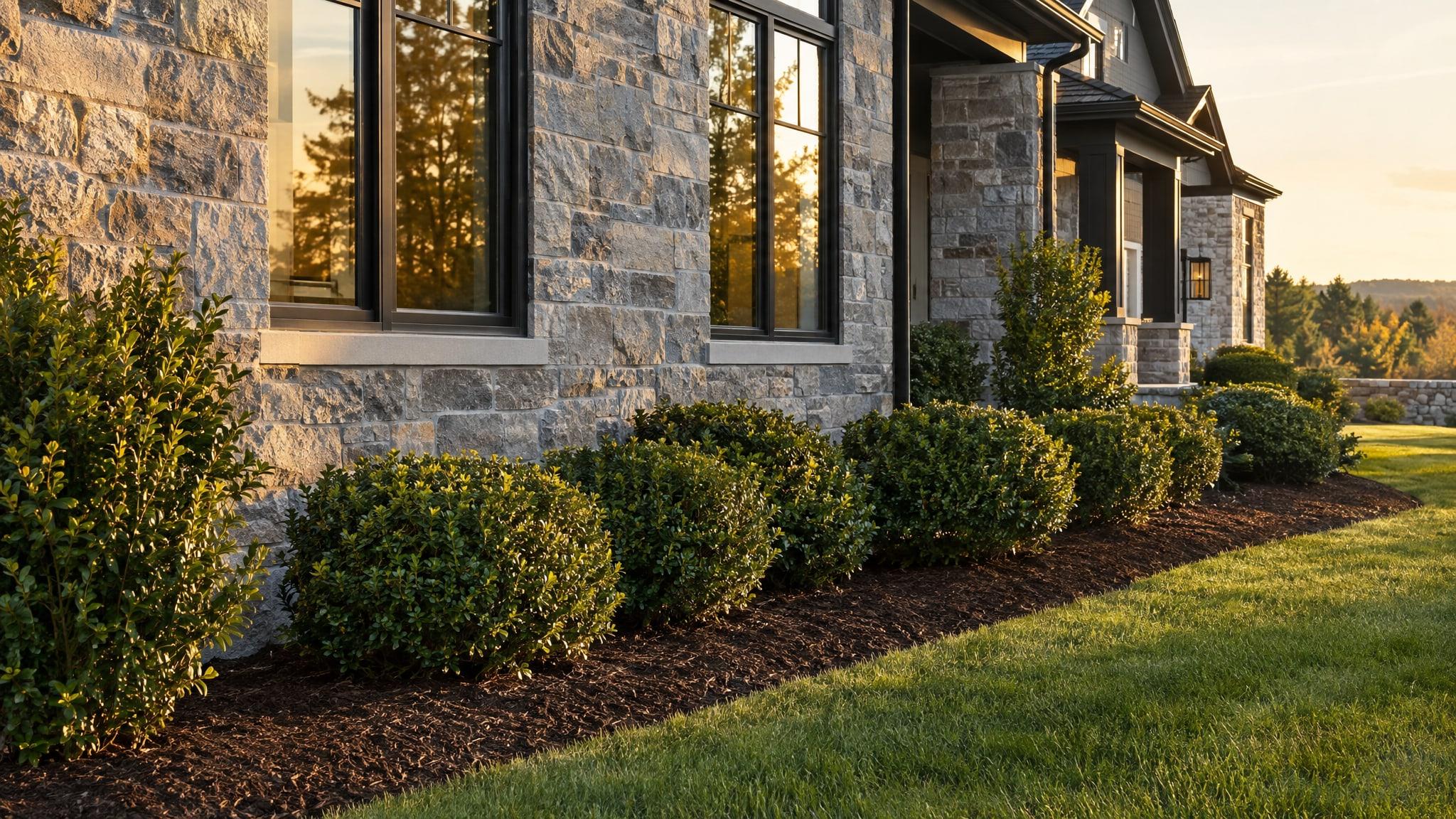
Mulching
Mulching
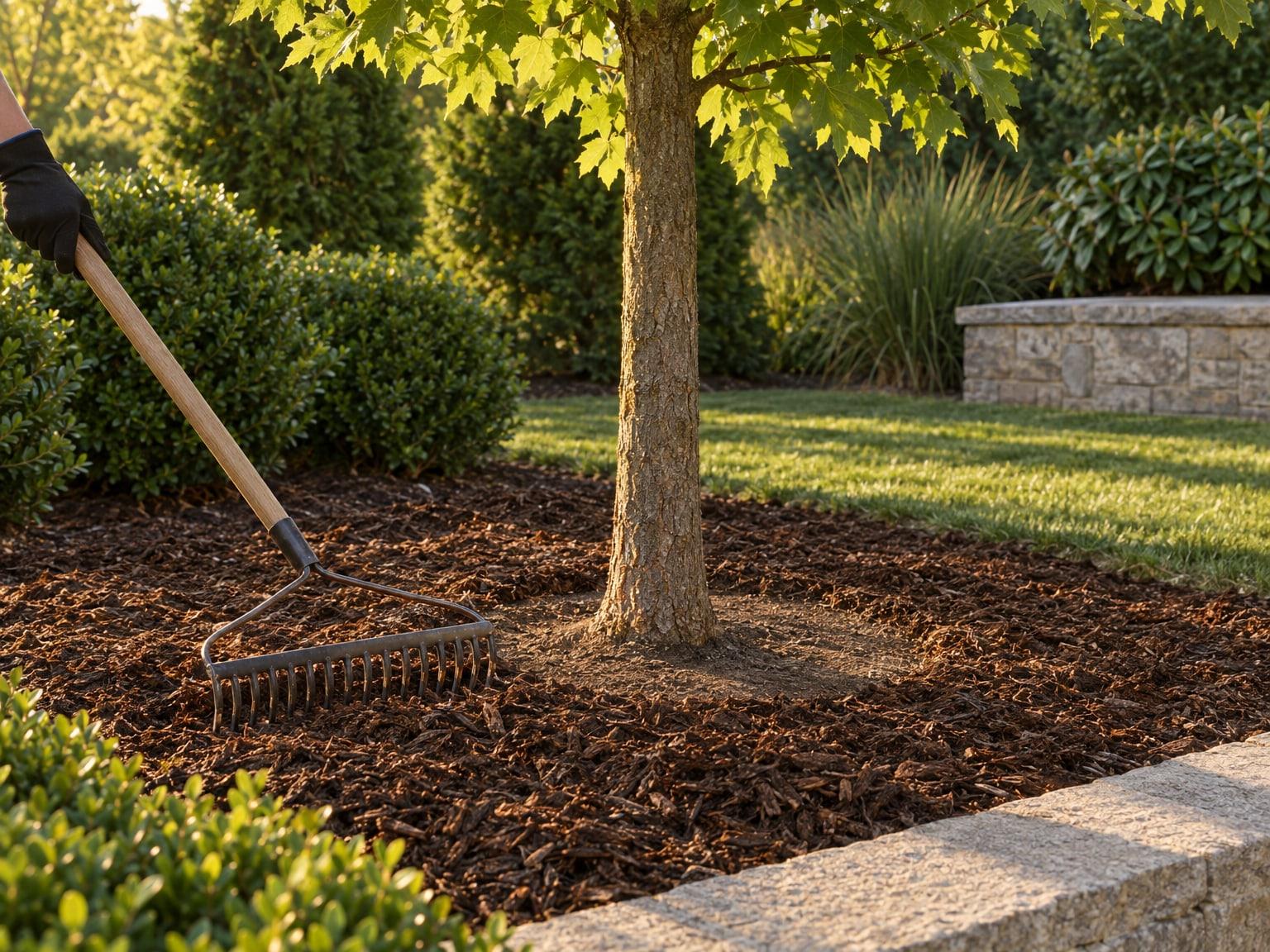
Fresh mulch, edged beds and a clean finish around shrubs and trees.
The short answer
How we mulch a bed
Mulching spreads a fresh layer of bark mulch over planting beds to hold moisture, slow weeds and give the yard a finished look. We edge the beds first so the line stays clean.
We weed and edge each bed, then spread mulch at an even depth, kept back from trunks and the house foundation. You pick the color; we work out how many yards your beds need and bring the right amount.
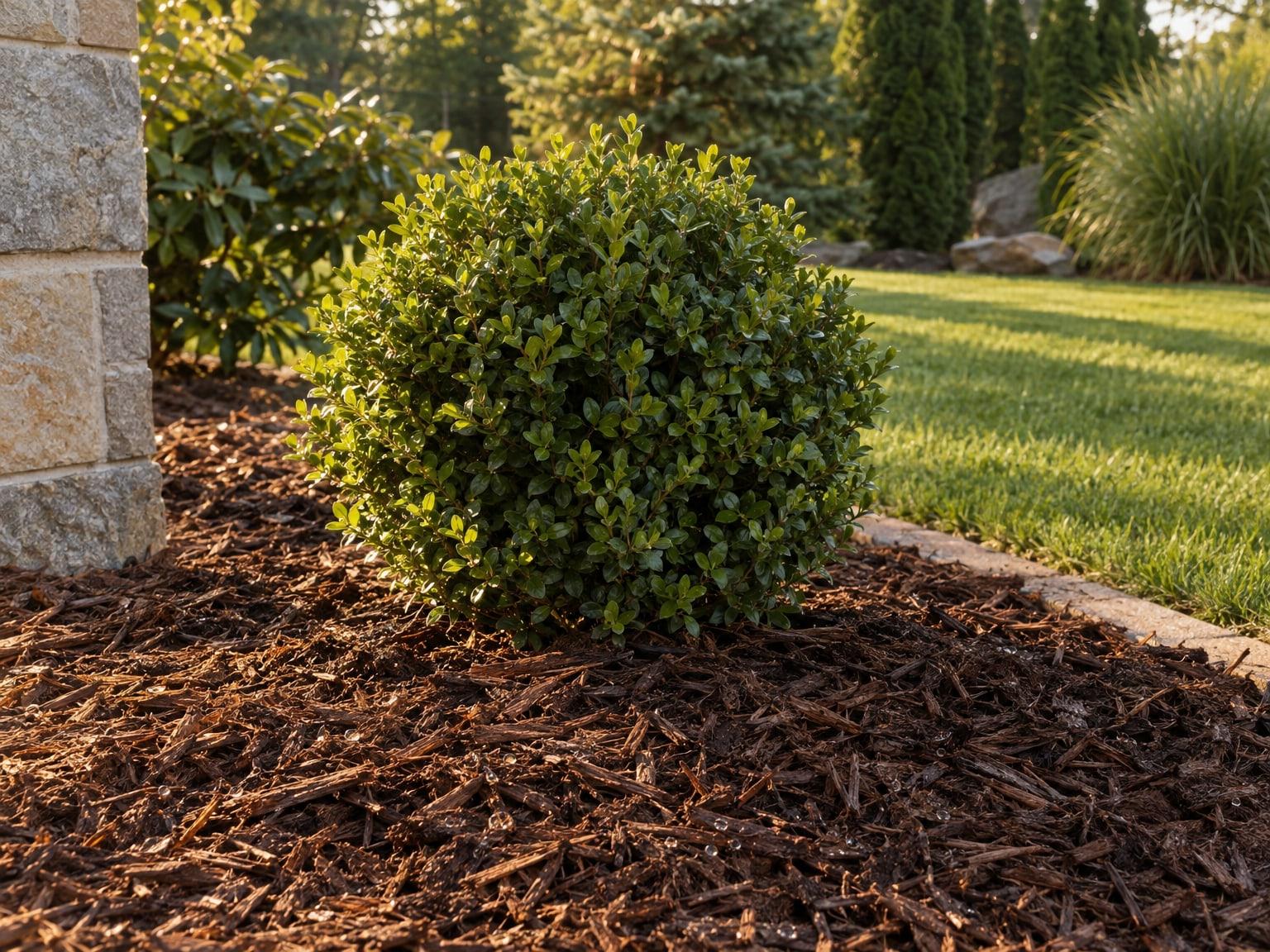
What mulch does for a bed
A fresh layer works well beyond looks.
Holds moisture
Less water lost to sun and wind, so beds need watering less often.
Slows weeds
A covered bed gives weed seeds less light to start in.
Steadies soil temperature
Roots stay cooler in summer and better covered in winter.
Feeds the soil
Bark mulch breaks down over time and adds to the soil under it.
Stops erosion
Rain hits the mulch, not bare soil, so beds keep their shape.
A finished look
Several types and colors, with edged beds that sharpen the whole yard.
How it works
How we do mulching
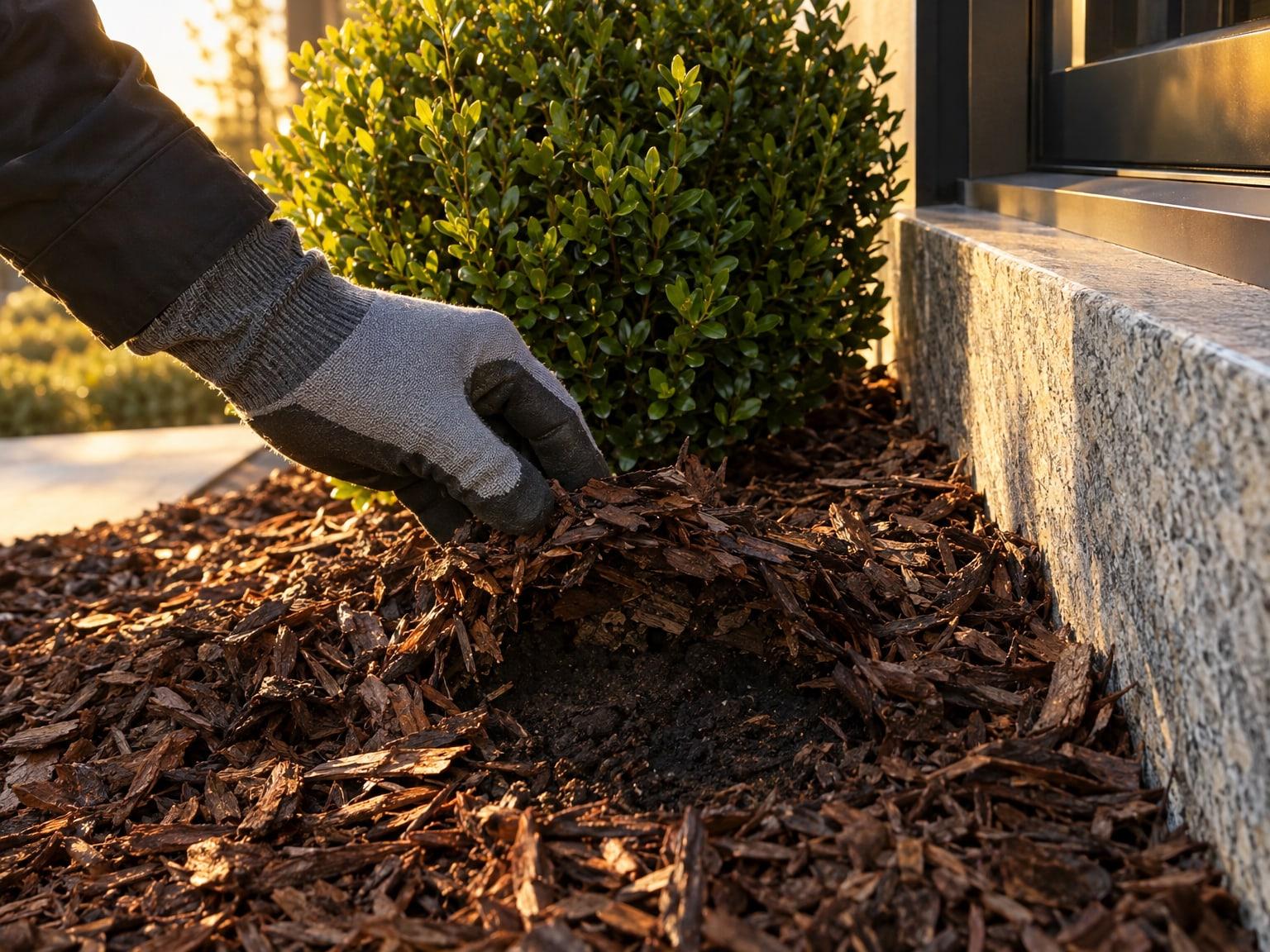
Price it, then walk it
Price your property on the Planner, then we walk the yard with you and confirm the number in writing.
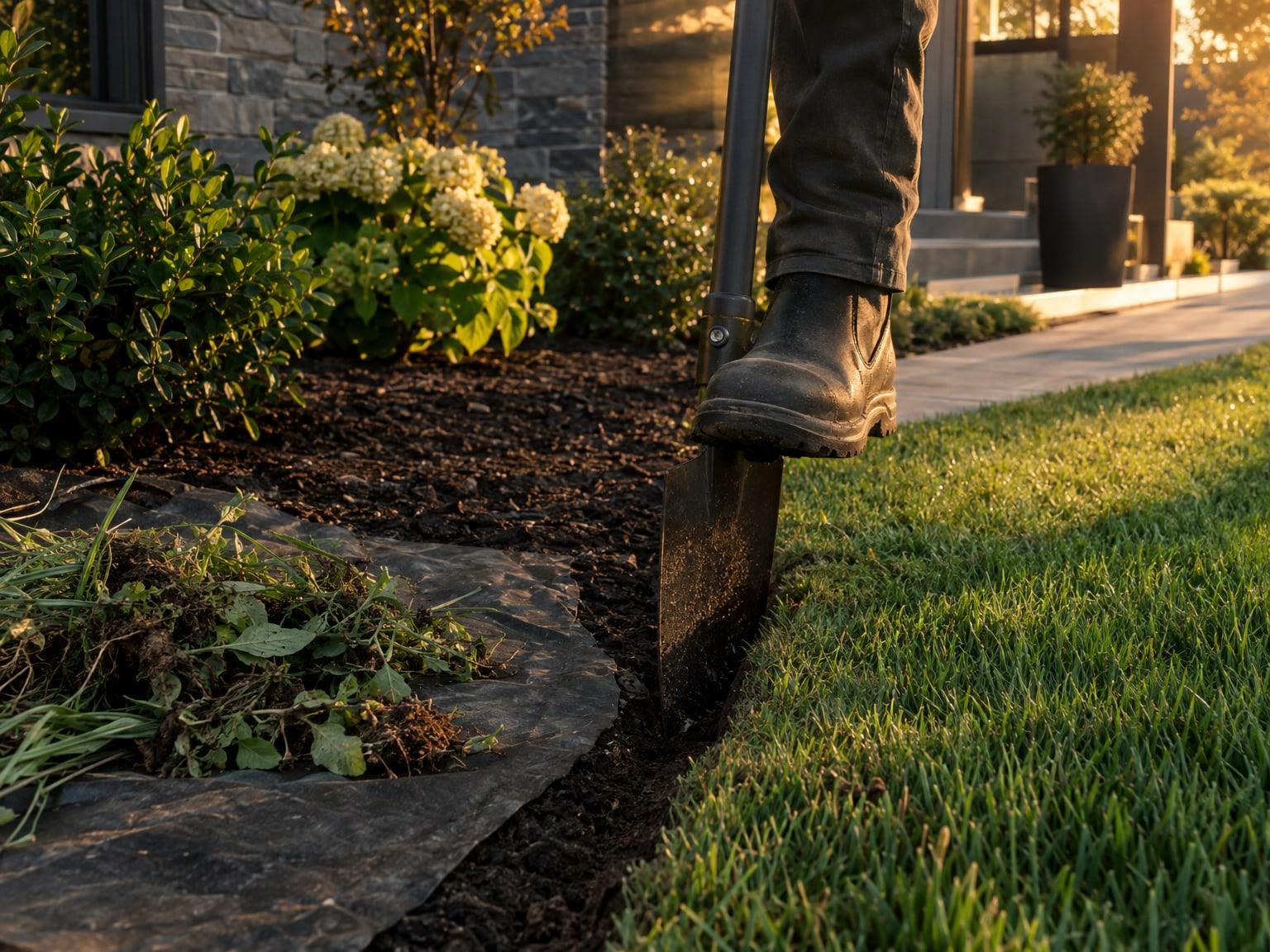
Edge and weed
Bed lines cut clean and weeds pulled before any mulch goes down.
Spread and tidy
Even depth, clear of trunks and siding, walks blown clean.
Pricing
What drives the price of mulch
The yards your beds need and the work before the mulch goes down. At about 3 inches deep, one cubic yard covers roughly 100 square feet, and 6 yards runs about $550 to $900. Edging, weeding and the mulch type move it from there. Ranges are typical southern New Hampshire figures, confirmed at your free walkthrough.
$550 to $900
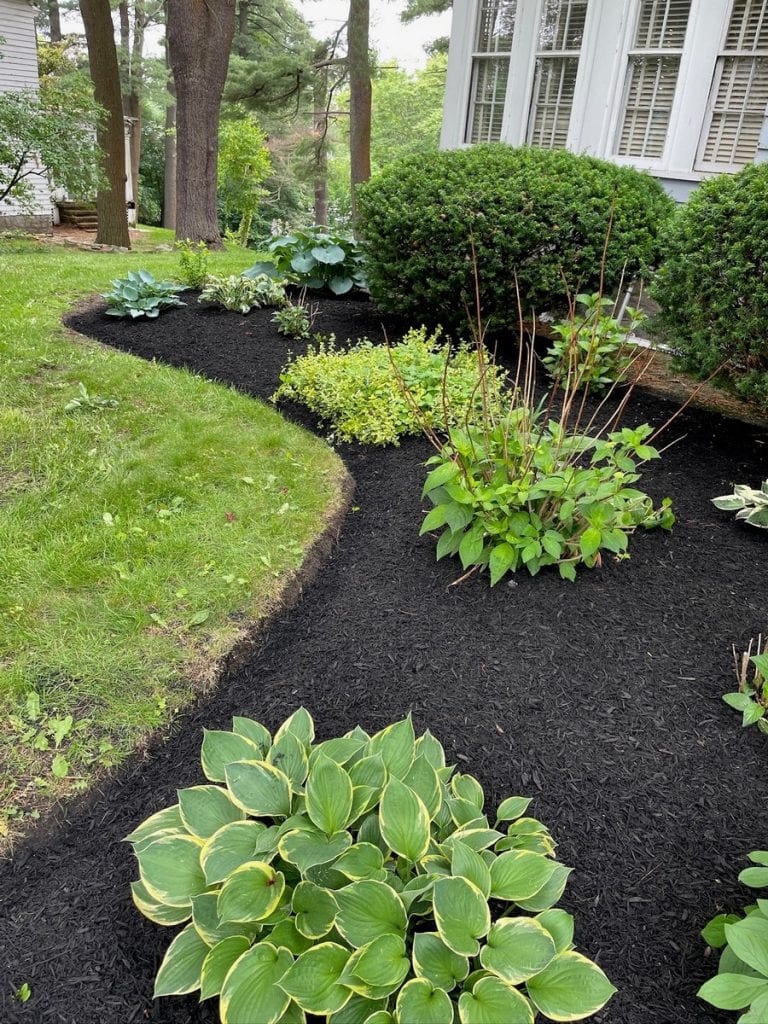
Medium beds, about 6 cubic yards installed
Photo: a B&W Outdoor job.
What your written quote lists
- Bed edging
- Weeding before mulch goes down
- Mulch delivered and spread at about 3 inches
- Kept clear of stems and siding
- Cleanup of walks and drives
Questions
Mulching: common questions
How much does mulch cost installed?
Installed mulch typically runs $95 to $150 a cubic yard in southern New Hampshire, with a $350 minimum. Beds that take about 3 yards come to $350 to $450; about 6 yards, $550 to $900.
How much mulch do I need?
One cubic yard covers about 100 square feet at 3 inches deep. The Planner estimates it from the size of your beds.
What color mulch should I pick?
Dark brown and black read clean against stone and lawn; natural tones suit wooded lots. We bring samples.
How often should mulch be refreshed?
At least once a year, usually in the spring. If it breaks down faster, a second top-up later in the season can make sense.
Can mulch be part of a cleanup or a care plan?
Yes. Mulch often goes down right after a spring cleanup, as a refresh on its own, or as part of a regular maintenance plan.
Outdoor Spaces. Built Right.
Price your mulching tonight.
Pick your services, see a range for your own yard, and request a free walkthrough with no obligation. We call you to confirm the time.