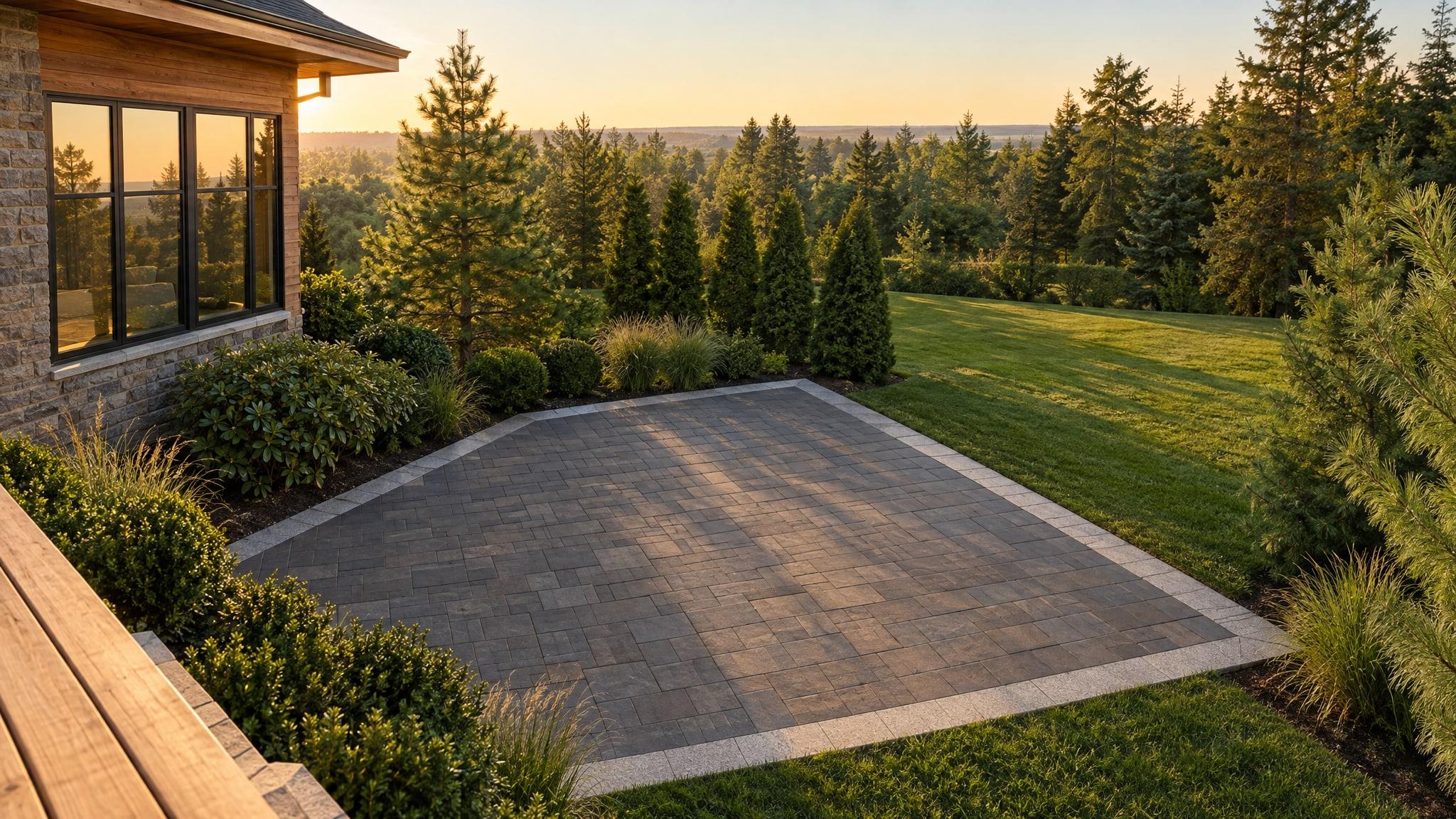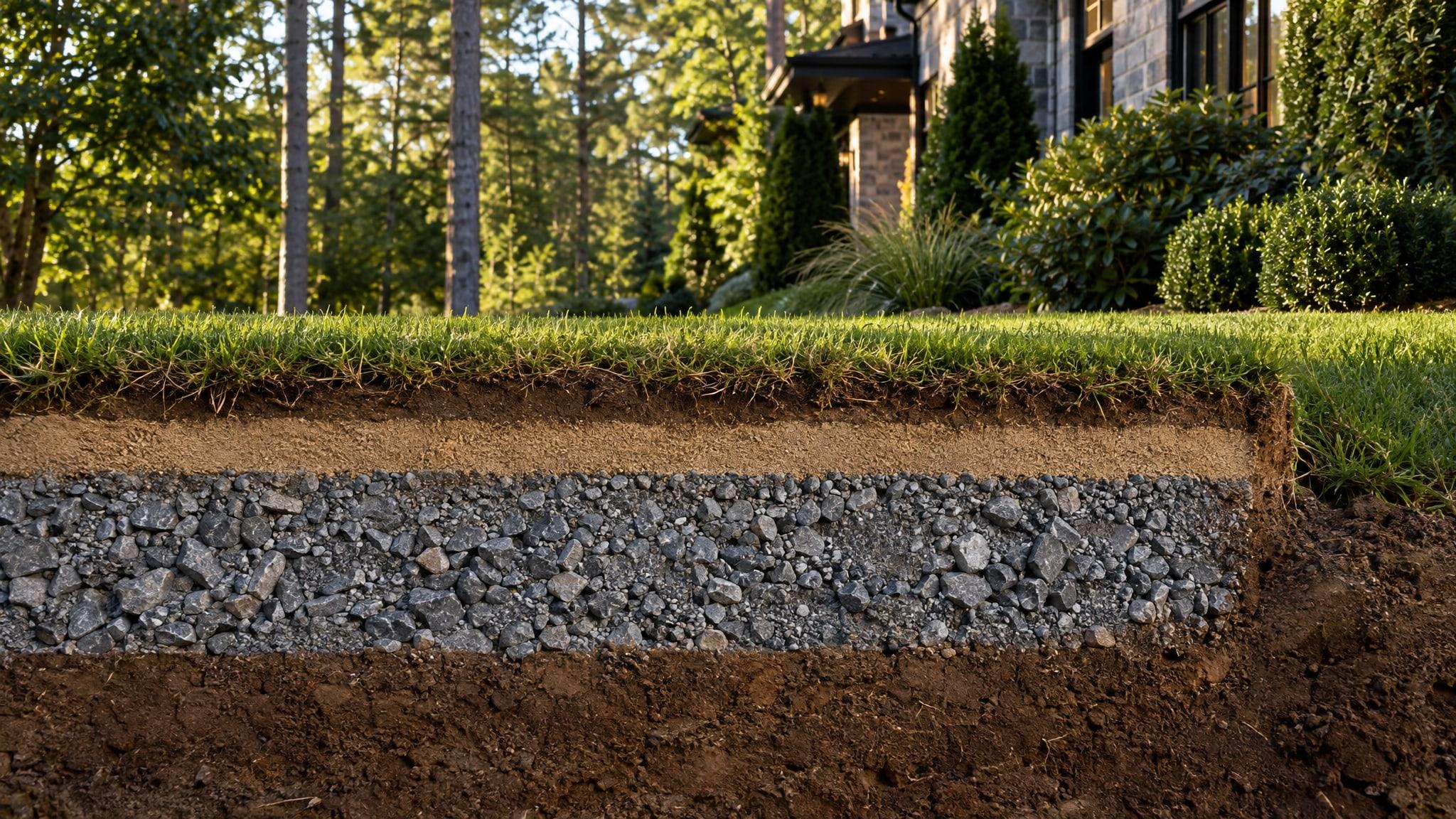
In New England, published contractor guidance puts the base under a paver patio at 6 to 8 inches of compacted gravel at minimum, and 8 to 12 inches where the soil is clay or holds water. Warm-climate guides that quote about 4 inches do not account for the freeze and thaw a New Hampshire patio lives through.
A properly engineered foundation requires digging down at least 6 to 8 inches to ensure structural integrity against frost heaves.
Why does frost change the base depth?
Water in the soil freezes, expands and lifts whatever sits on it, then drops it again in the thaw. Many cycles a winter loosen a thin base, and pavers start to rock, sink and separate. A deeper layer of crushed stone, compacted in thin lifts, drains water away and spreads the load so the surface stays flat.
What are the layers under a paver patio?
- Excavation down to firm subsoil, with the soft topsoil removed
- Geotextile fabric on clay, where it is needed
- Crushed stone base, compacted in thin layers
- A screeded bedding layer of about an inch
- The pavers, locked in with edge restraint
- Polymeric sand swept into the joints
How deep for a walkway, a patio and a driveway?
| Surface | What it carries | Base guidance |
|---|---|---|
| Walkway or patio on well-drained ground | Feet and furniture | 6 to 8 inches compacted at minimum |
| Patio on clay or wet ground | Feet and furniture | Toward 8 to 12 inches, placed in lifts |
| Driveway | Cars and plows | Deeper again, set at the walkthrough |
How do I know what a quote includes?
Ask for the base depth in writing. A quote far below the others is often a thinner base, no compaction in layers, or no fabric on clay. On every patio we price, the written quote states the depth of compacted gravel we will put under it, set after we look at your soil and where the water goes.